Why I Voted for the Assisted Dying Bill
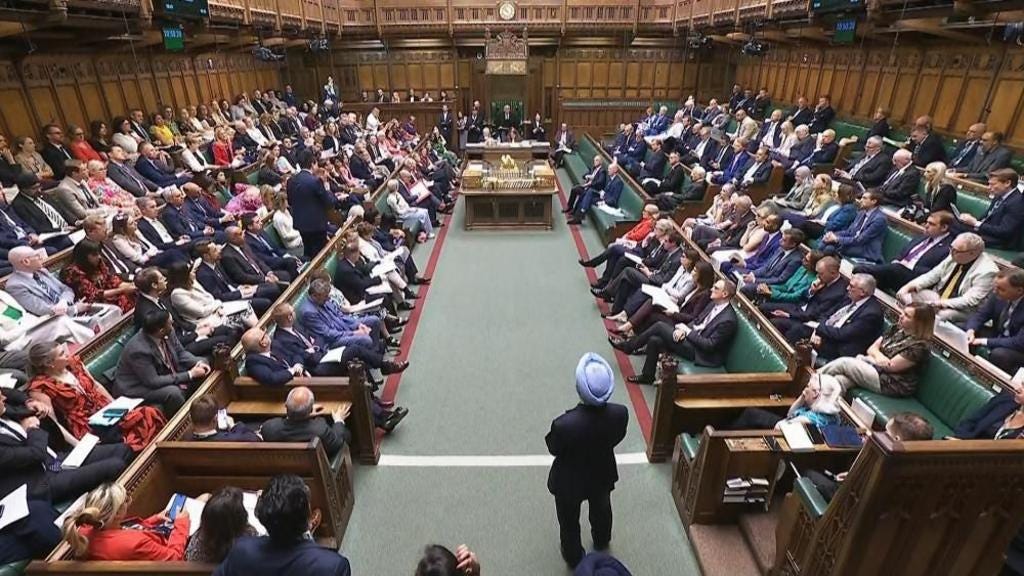
Lots of MPs in the House of Commons chamber today wanted to speak. I was one of them. Unfortunately, like many MPs, there wasn't time for me to be called to speak.
In order that my constituents can understand my thinking about why I voted in favour of the Terminally Ill Adults (End of Life) Bill (known as the Assisted Dying Bill) please see below my full speech transcript that I would have given had I been called, but in short:
We shouldn't reject legislation because it isn't theoretically perfect - we act on matters of life and death despite imperfection, just as we do with trial by jury or surgery
I placed the terminally ill individual at the heart of my decision, particularly remembering a terminally ill woman who urged me to support the Bill while I was campaigning
As a son, father, brother, husband and friend, I could not deny someone the autonomy and dignity they're asking for at the most vulnerable moment of their life
The Speech I Would Have Given
I rise in support of the Bill.
In life we often seek perfection and certainty when neither are achievable. I’m concerned that in this debate, a lack of absolute, theoretical perfection is being used as a reason for rejecting this Bill.
The Bill is rightfully being held to a very high standard given what’s at stake. But if perfection was the ultimate standard, no legislation would ever pass.
This is not the only example of a matter of life and death or great consequence that parliamentarians decide on.
We do not end trial by jury because juries sometimes make mistakes.
Or ban surgery because surgeons on rare occasions make errors.
Instead, we do our very best in an imperfect world.
We act, because we know that the decision not to act is also an action with consequences, especially when the status quo is so inhumane for so many.
We have all spoken to constituents, doctors, and most importantly, terminally ill people.
Today we are each a moral proxy for the individual who faces an imminent death - not for their doctor, or their family or friends.
I have chosen to place that individual at the heart of my decision making.
One individual sticks in my mind. I had just spoken to a man on the doorstep while campaigning recently. A few moments later, his wife approached me down the street.
She shook my hand, told me that she was terminally ill, thanked me for supporting the Bill and urged me, indeed urged us all in this House of Commons, to do what we can to make sure it passes.
I told her that I could not look her in the eye, or anyone who is terminally ill and wants an assisted death, and deny them.
Another constituent told me, regarding their own adult child who had been terminally ill, that had they requested help with ending their suffering, they would have done so. Fortunately this wasn’t necessary but it highlights the inadequacies of the status quo.
Opponents of the Bill have argued that that bad actors may abuse the system proposed, they’ve raised technicalities around possible drugs, parliamentary procedure, well-intentioned ethical and legal concerns or spoken of the risk of coercion or the slippery slope. They mention the medical organisations, yet all the royal colleges are neutral.
I do not dismiss these concerns, but my Hon. Friend the member for Spen Valley and others have set out eloquently why they are unfounded.
I pay tribute to my Hon Friend. She’s the best example of a genuine and effective parliamentarian, and a decent, compassionate human being.
But to return to my thought experiment: could I look a relative, a friend or a colleague in the eye, someone who is terminally ill, and say that, because of the concerns raised – “I am going to deny you the autonomy and dignity you are asking for, at the most vulnerable moment of your life.”
As a son, a father, a brother, a husband, and a friend, I could not say that. And I will not.
This is the thought experiment that I urge Hon members to carry out.
We must hold the interests of the terminally ill person at the forefront of our minds.
It is about them, not us – we who at present are fortunate not to face the ultimate moral and physical dilemma.
The Bill is the best way to give practical effect to the compassion that we all feel. I believe it will help alleviate agony, assert agency and enhance dignity.
A key tenet of several religions, often known as ‘the Golden Rule’, should guide us today:
“Do to others as you would want them to do to you.”
I urge Hon members to support this bill.
Important notice: This is a one-way communication channel
Please note that this newsletter operates as a one-way communication channel only. Responses and comments to this email are not monitored and will not receive a reply. This newsletter is designed specifically to share my writing with you, not to handle individual enquiries or concerns.
Need to contact me? Here's how:
If you are my constituent and need to raise a matter, seek assistance, or have a casework enquiry, please use the appropriate channels:
Email: john.slinger.mp@parliament.uk
Phone: 01788 227444
When contacting my office, please include:
Your full name and postal address
Details of your enquiry
Any relevant reference numbers
My team and I will respond within:
Urgent casework enquiries: Within 1 week
Other casework enquiries: Within 2 weeks
Policy enquiries: Within 3 weeks